The photographs always show the same two frames: a fishing boat sitting flat on mud with its lines slack, and the same boat afloat six hours later. Both are true. What the photographs leave out is that the interesting hours are usually cold, the mud smells strongly of salt and rot, and the moment you actually want, the turn, does not announce itself. Water comes in across a flat at something like walking pace in places and faster in the narrows. It does not roar. It just arrives, and the rock you were standing on is a foot under before you have finished a sentence.
The second thing people get wrong is scale in the wrong direction. They expect a wall of water and are briefly disappointed. The number, fifty feet in the upper reaches near Burntcoat Head, is vertical. Horizontally it means the shoreline moves out a quarter mile and then comes back, and you only feel that if you walk out at low water and look behind you at where the parking lot is. That is why this trip is built around walking out rather than around viewpoints. A viewpoint gives you the picture you have already seen.
Third: it is two provinces, not one. New Brunswick holds the north shore, Nova Scotia the south, and the towns on the two sides do not resemble each other much. Nine nights is what it takes to do both without spending the whole trip in the car, and the ferry across saves about five hours of driving around the head of the bay.
- What the week is
- Nine nights in five towns, all of them in small inns or family run motels with private baths, moving by rental car on paved two lane road, an hour to three hours between beds, and you carry your own luggage in and out each time.
- What sets it apart
- Most people reach this by driving, not flying. Boston is about eight hours to the New Brunswick shore, Portland about six; the nearest useful airports are Saint John and Halifax, both an hour or two from the water. The ground is red mud, wet sandstone, seaweed on rock, and gravel roads down to the shore. Beds are inns of six to fourteen rooms, no elevators in most. Shore season runs mid May to mid October. From $2,690 per person, two sharing.
- What the figure covers
- Nine nights of lodging with private bath and breakfast; a mid size rental car with unlimited mileage for the full nine days; ferry crossing between the two shores for car and passengers; two guided low water walks on the sea floor with a local licensed guide; one boat trip out to the tidal rapids; one horse drawn wagon crossing at a mudflat where cars cannot go; all provincial park entry for the nine days; a printed tide table marked with your specific hours; and a written route with the driving times measured, not estimated.
- What it leaves to you
- Flights or your own fuel to reach the region, which is roughly $180 to $260 in gas if you drive from Boston; all lunches and dinners, budget $55 to $85 per person per day; the second tank of gas inside the trip, about $90; rubber boots, which you either bring or buy locally for around $40 and will genuinely need; the single occupancy figure of $840 on top if one person is in the room; whale watching, which is a separate $110 per person and only reliable from July onward; and any change fee if you move dates after the inns are held.
- Who this one is wrong for
- Do not book this if stairs are a problem. Four of the five inns have bedrooms on a second floor with no elevator, and two have narrow staircases with a turn. The sea floor walks are one to two miles over uneven wet rock and ankle deep mud, with a hard cutoff time because the water comes back, and there is no way to shorten one once you are out on it. If someone in the party cannot walk a mile on bad footing inside ninety minutes, that person waits on shore. Driving is unavoidable: three to four hours some days.
Reading a tide table until it stops feeling like homework
The tide runs about twelve hours and twenty five minutes from one low to the next, which means low water slips roughly fifty minutes later each day. Over nine nights that walks a full circuit: a low at seven in the morning at the start of the trip is a low in the early afternoon by the end. Your days therefore cannot be identical, and the office builds the route so the sea floor days land where the low is civilized rather than at four thirty in the morning.
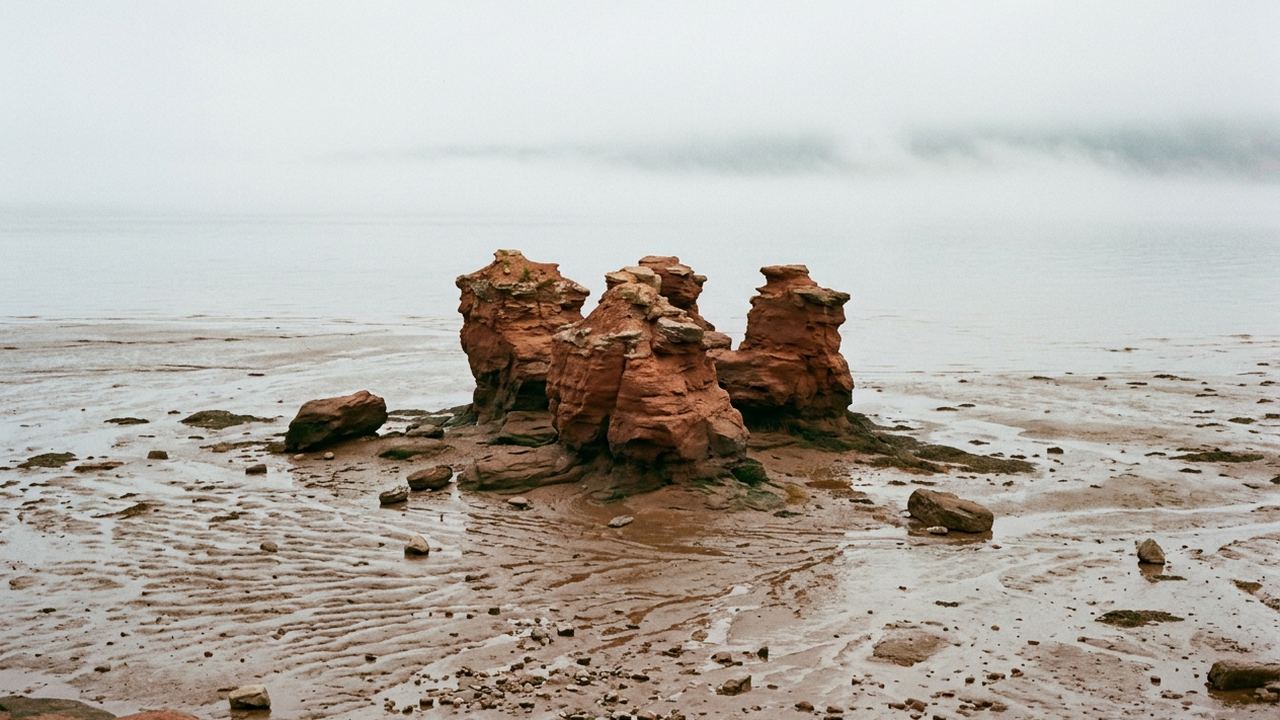
Footing is the part nobody photographs. On the sandstone flats it is fine, grippy, almost like wet pavement. On the mud it is shin deep in places and pulls at your boot, and on the seaweed rock it is genuinely slick. Rubber boots, not hiking shoes. People arrive with expensive footwear and ruin it in the first hour.
Weather is fog, and the fog is not a nuisance to be waited out, it is the climate. Water temperature in the bay sits around 46 to 54 degrees through the summer, and that cold water under warm air makes fog most mornings from June into August. Air temperature at the shore runs 60 to 72 in July and August and drops into the fifties fast when the fog rolls, so a fleece and a shell come with you every single day, including the days that start bright. Inland, twenty miles from the water, it can be eighty five and clear while the shore sits at sixty in cloud.
Who ends up glad they came here rather than somewhere warm
This suits people who want a week where something specific and measurable is happening whether or not they are entertained by it. The tide does not care about you, and a lot of people find that restful after years of destinations that try. It suits drivers, it suits people who are content with a small town of nine hundred people and one restaurant that closes at eight, and it suits anybody who has decided that flying six hours is off the table this year.
It suits first timers to Canada reasonably well, since the roads are good, the signage is bilingual on the New Brunswick side, and nothing about the logistics is exotic. It does not suit people who want variety of evening. There is not much evening here.
Six cells, one for each obstacle, filled where this trip answers. Read the words below rather than the strip; the strip is a shorthand.
- The dates are fixed and short
- answers it. Everything else that answers it
- Somebody will not fly, or not far
- answers it. Everything else that answers it
- The party moves at two speeds
- does not. The tide sets the cutoff, so the slowest walker sets whether the whole party goes out on the sea floor at all, and there is no shortened version of the walk. What does
- The free weeks are out of season
- answers it. Everything else that answers it
- One person travelling
- does not. The room figure is built on two sharing and the single supplement is $840, which on a nine night trip is the largest single line on the page. What does
The calendar decides more than the budget does
- Mid May to mid June
- Shore opens, everything cold, air in the fifties, fog heavy, and several inns still on partial staff. The low end of the range and genuinely empty, but two of the boat operators are not running yet.
- Late June
- Everything open, water still cold, fog frequent, and the flats to yourself on weekdays. This is the week the office books most often, at roughly the middle of the range.
- July
- Warmest air, most reliable boat days, whale watching becomes worth the $110, and the inns fill six to eight weeks ahead. Expect the top of the range and hold dates early.
- August
- Same weather as July, more traffic on the coastal roads, and the ferry needs a reservation days in advance rather than hours. Peak figure, and the least room to move dates.
- Early to mid September
- Warm water at last, thinner crowds, fog less constant, and the light gets long and low. Many people who have done this trip twice come back in this window.
- Late September to mid October
- Color inland, sharp cold mornings around 40 degrees, some boat operators finished for the year, and rates fall back. Sea floor walks still run.
- Mid October to mid May
- Closed. Inns shut, walks are not offered, the ferry runs a reduced winter schedule, and the office will not book this trip in that window.
The mud, the driving, and the thing about the horse
Two real drawbacks. The first is the car. There are days with three to four hours of driving, some of it on two lane road behind a truck, and if nobody in the party enjoys driving, this trip is a chore with a good view attached. There is no rail alternative that reaches the shore towns and the bus network is thin enough to be unusable for this route. If one person will be doing all the driving, say so when you send the request and the office will shorten two of the legs, which costs a night elsewhere.
The second is the mud, and specifically what it does to your things. Red Fundy silt stains. It comes out of cotton badly and out of light colored boots not at all. Bring dark clothes you do not care about and a plastic bag for the drive back to the inn. The horse drawn wagon crossing, which sounds like a novelty for children, exists because the flat it crosses will swallow a vehicle, and the wagon is doing a job rather than performing one. It is slow, it is open to the weather, and in a cold drizzle it is forty minutes of being cold and wet on a bench. It is also the only way onto that particular flat, so it is in the trip.